
Science, whales and dolphins: a voyage across the most emblematic marine areas of the Canary Islands
SECAC · Society for the Study of Cetaceans in the Canary Archipelago & Gara Project Prime S.L.
The Canary Islands offers unique conditions for the study of cetaceans:
deep waters close to the coast, Atlantic and African influence, seamounts, inter-island corridors and an extraordinary marine diversity.
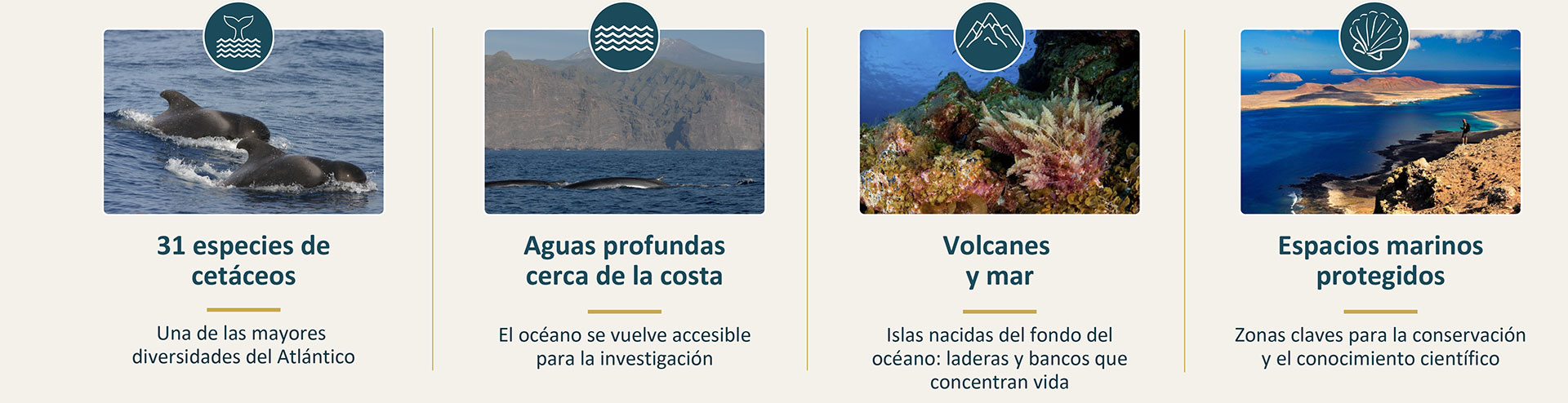
A total of 31 cetacean species have been recorded in these waters, including resident, migratory and deep-diving species.
The Society for the Study of Cetaceans in the Canary Archipelago is a scientific NGO founded in 1993.
Since then, it has promoted the research, conservation and public understanding of cetaceans in the Canary Islands, developing scientific, educational and public-awareness projects.
SECAC is curator of the Macaronesian Cetacean Reference Biological Collection, runs the Canary Islands Cetacean Research Centre in Arrecife and collaborates with researchers and centres nationally and internationally.
It also holds administrative authorisation from MITECO to carry out studies with cetaceans.
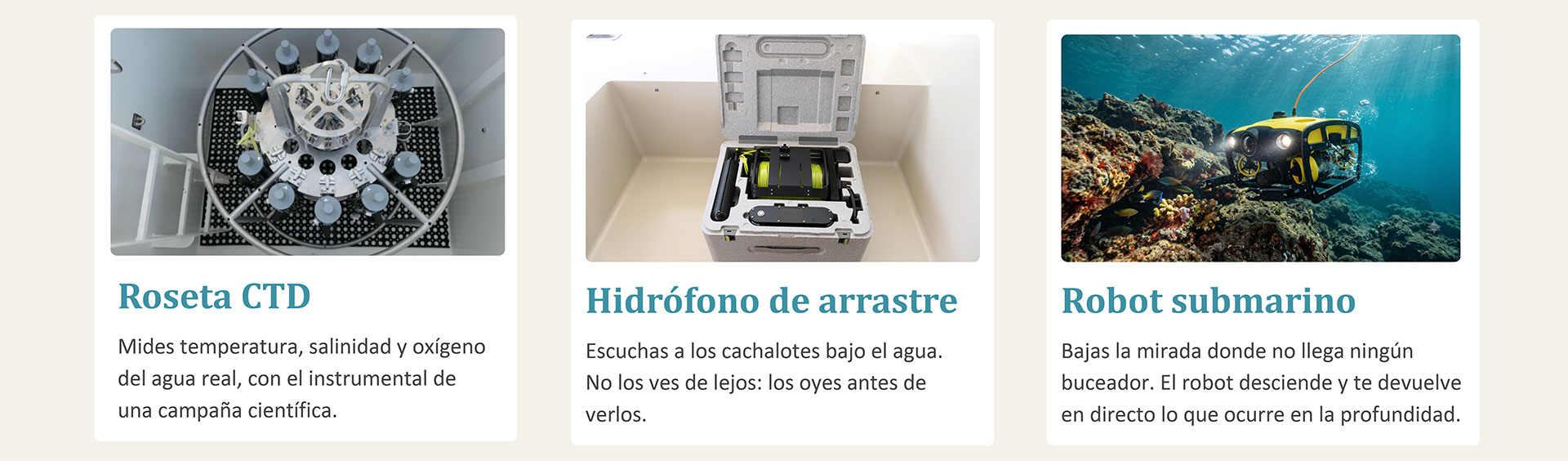
No experience is needed: all it takes is the right attitude, a spirit of teamwork and a desire to learn. On board, you take part in the life of the boat as much as you feel like — or simply let go and enjoy the ocean. You choose, every day.
You can:
Predetermined transects with a towed hydrophone to determine the distribution and frequency of cetaceans, seabirds and turtles.
Acoustic monitoring of group movements in each study area.
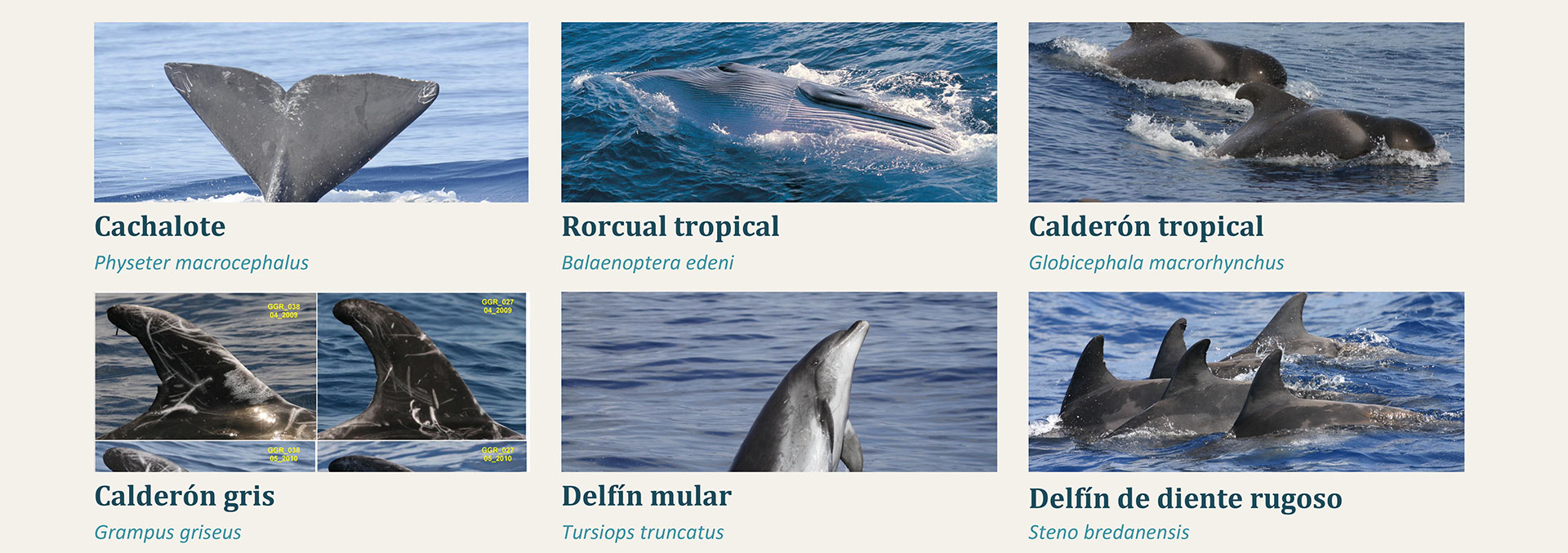
Special attention to sperm whales, beaked whales, pilot whales and dolphins.
Individual identification of target species to obtain demographic and behavioural data.
Welcome aboard in Arrecife (Lanzarote) from 5 pm
Introduction to the team, the expedition and the scientific protocols.
Chapter I · The volcanic origin
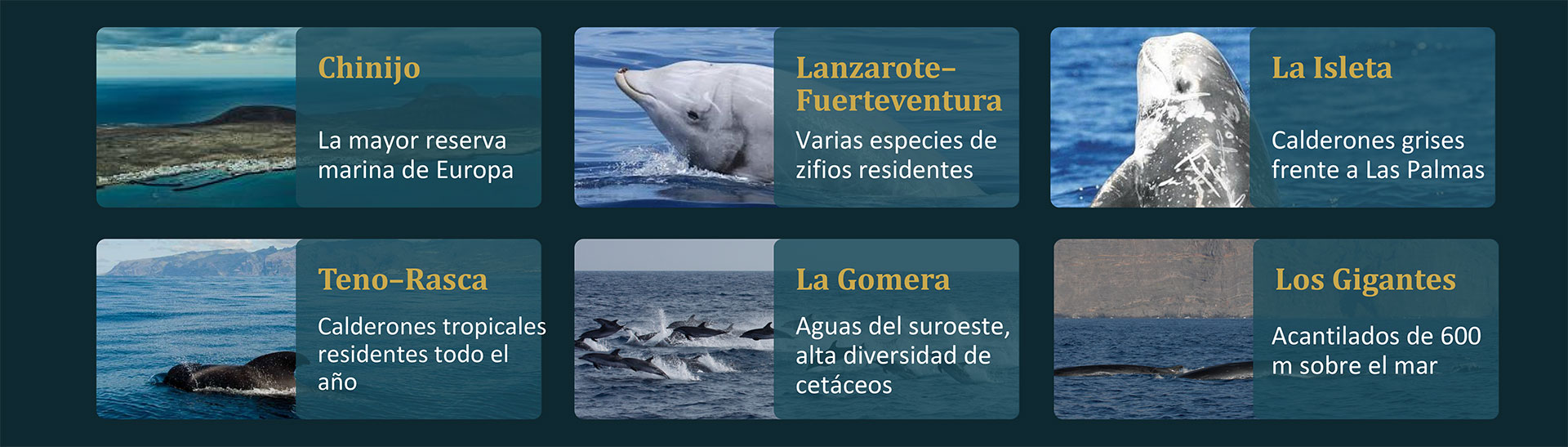
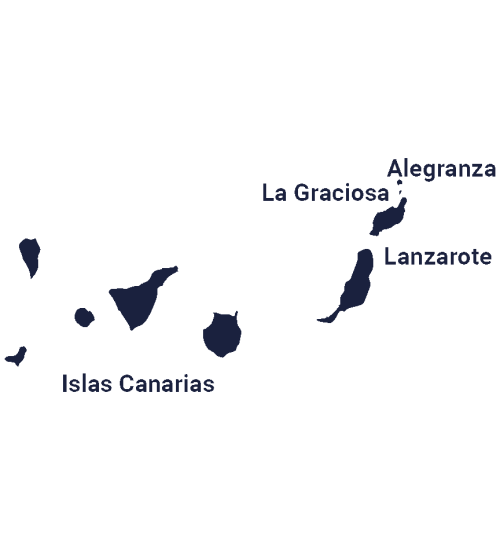
Lanzarote · Chinijo Archipelago · La Graciosa
On the second day we begin sailing through one of the oldest and most protected marine landscapes
in the Canary Islands: cliffs, volcanic islands, seabeds of high ecological value and Europe’s largest
marine reserve. First cetacean observations.
Chapter II · The deep corridor
Eastern Lanzarote · Fuerteventura
We enter an exceptional area for deep-diving cetaceans: beaked whales, pygmy sperm whales, seamounts and waters of high biological productivity.
Chapter III · The city and the ocean
Gran Canaria · La Isleta
Dawn off Las Palmas de Gran Canaria and sailing through the La Isleta marine area, where maritime traffic, marine life and resident Risso’s dolphins coexist
Chapter IV · Humboldt’s gaze
Northern Tenerife · Anaga · Teide · Los Gigantes
Sailing around Tenerife: from the green landscapes of the north that inspired Humboldt to the
volcanic cliffs of Los Gigantes.
Chapter V · The realm of the pilot whales
Teno–Rasca · Los Gigantes
Two days in one of the most important areas in the world for observing short-finned pilot whales and
bottlenose dolphins.
Chapter VI · Wild La Gomera
Santiago · Valle Gran Rey
Sailing towards a rugged, green and deeply oceanic island, with waters of great interest for cetacean observation.
Chapter VII · The return
Passage back to Lanzarote
Final observations, close of the expedition and return to port.
*The itinerary may be adapted depending on weather, oceanographic or scientific conditions.

